
Specializing in the production of STARMATEC refrigeration equipment, providing efficient refrigeration solutions.


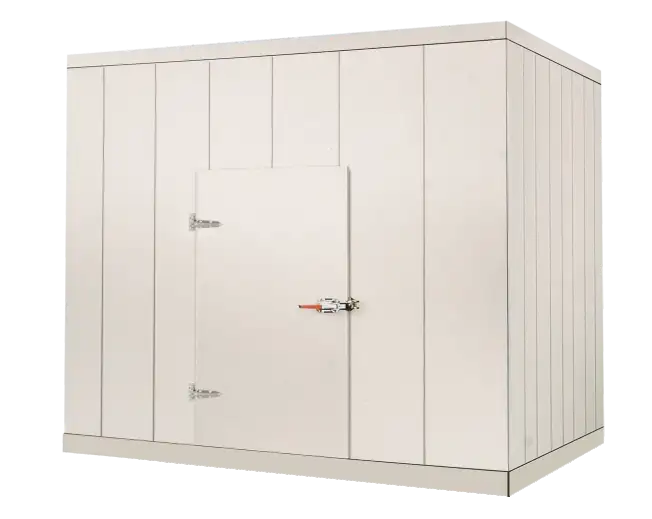
Coldroom
Product details:
The cold storage panel is with light polyurethone inside and PVC painted steet,stainless steel etc outside,the cold storage penel can reduce the heat transfer due to the difference ofthe internal and exteranl temperature so that itcan reach freezing temperature and make the of refrigeration sgstems.
Panelthickness specifications: 50,75,100,180,120.150.200,250 mm
Panel size: standardized panel width 960mm, height 2 meters to 15 meters
(Note: The panel thickness and size can be customized according to the requirements of our customer .).
Hook-type coid storaae panet: with the characteristic oflioht weiaht,hiqh compressive strength hiqh flameresistance.good seismic performance,fexible combination and easy installation,the temperature ofthis is-50-+100 C. Standard width: 960mm, customizedlenqth:1 m -15 m
Plug-in Cold storage Panel: Plug-in connection for the concave groove docking, the outside can be pulledwith pull nails, and the inside can be filled with glue or PU materials . So there is no cold bridge and the
temperature can be kept. lt can be used forlarge cold storage room or Air conditioning cold storage roomStandard width: 950mm, 1150mm, customizedlength: 1-2 meters
Professional atmosphere and low temperature freozerPanel: The panel is directly connected with the cardlock. the middle will be filled with PU bubble, and then brush with the glue to cut off the cold bridge. Standardwidth:960-1160mm, any board Iength: 1-15 meters
Cold storane evaporator classilication -coolorl pipe steanning
(Com monly known as iron row) as the production ofevaporator can play the role ofcold storage, good strength,strong stability,widely used in cold storage industry
High quality of coldroom is crucial for food preservation, energy efficiency, and operational performance. Below are the key factors to evaluate their quality:
1. Refrigeration Performance
- Cooling Speed & Stability: High-quality refrigerators should cool rapidly and maintain a consistent temperature (e.g., 0~10°C for chilled, -18°C or lower for frozen), with minimal fluctuations.
- Temperature Uniformity: Internal temperature variation should be ≤2°C to prevent uneven cooling or frost buildup.
- Environmental Adaptability: Should operate stably even in high-temperature or high-humidity conditions (e.g., near store entrances).
2. Energy Efficiency & Environmental Friendliness
- Energy Rating: Prioritize models with Grade 1 energy efficiency to reduce long-term electricity costs (daily power consumption should be clearly labeled).
- Eco-Friendly Refrigerants**: Use low-GWP refrigerants (e.g.,R404a, R290, R600a) compliant with regulations (e.g., EU F-Gas standards).
3. Materials & Construction
- Casing: Stainless steel (corrosion-resistant) or reinforced galvanized steel; interior lined with food-grade ABS/antibacterial coating.
- Insulation Layer: Polyurethane foam thickness ≥50mm, high density to minimize cold loss.
- Sealing Performance: Magnetic door gaskets (test by inserting a bill) and anti-condensation design.
4. Functional Design
- Display Convenience: Adjustable multi-tier shelves, sliding rails, and front/rear access (for island or wall-mounted units).
- Defrosting Technology: Frost-free air cooling (for freezers) or manual/auto-defrost (cycle should be specified).
- Smart Controls: Digital temperature panel, remote monitoring (Wi-Fi), and fault alarms.
5. Safety & Compliance
- Electrical Safety: Complies with GB 4706.1 (China) or UL (US) standards, with overload and leakage protection.
- Food-Grade Materials: Certified by FDA or EU 10/2011, ensuring non-toxic and odor-free materials.
- Impact Protection: Rounded edges, tempered glass with anti-shatter film (optional).
6. Brand & After-Sales Service
-Top Brands compressors and controllers etc., offering,1 year warranty.
- Service Network: 24/7 support
Purchasing Recommendations
- Match Needs: Select the right type (upright/chest/open-case) based on products (ice cream/dairy/fresh food).
Evaporator is the core component of a refrigerator's cooling system, and its quality directly affects cooling efficiency, energy consumption, and equipment lifespan. Below are the key factors for evaluating evaporator quality:
1. Material & Corrosion Resistance
- Preferred Materials:
- Copper Tube with Aluminum Fins: Excellent thermal conductivity (copper for high-pressure resistance, aluminum for lightweight), used in mid-to-high-end models.
- Hydrophilic Aluminum Coating: Prevents frost buildup and water retention, improving heat exchange efficiency.
- Anti-Corrosion Treatment: Surface should be anodized or epoxy-coated to delay rust (especially in coastal areas).
2. Structural Design
- Heat Exchange Area: Optimized fin spacing (typically 3~5mm) ensures balanced airflow and heat transfer.
- Pipe Layout: U-shaped or serpentine coil design minimizes refrigerant flow resistance and avoids "dead oil zones."
- Welding Process: Seamless brazing or high-frequency welding, leak-free (verifiable via helium or pressure testing).
3. Cooling Efficiency
- Heat Transfer Coefficien: High-quality evaporators should have a coefficient ≥30W/(m²·K) for rapid cooling.
-Temperature Uniformity: Even evaporator distribution (e.g., multi-vent design) ensures internal temperature variation ≤2°C.
- **Refrigerant Compatibility**: Supports eco-friendly refrigerants (e.g., R290/R404A) without efficiency loss.
4. Defrosting Performance
- Automation Level:
- Frost-Free Air Cooling: Uses fans for forced circulation, eliminating manual defrosting (ideal for freezers).
- Electric Defrosting: Heating element power must match evaporator size to prevent incomplete defrosting or overheating damage.
- Drainage Design: Sloped drip tray + drainage channel prevents ice buildup or bacterial growth.
5. Durability & Maintenance
- Mechanical Resistance: Fins with moderate hardness (to avoid deformation) and rounded edges.
- Ease of Cleaning: Modular or detachable design simplifies dust and bacteria removal.
- Lifespan: High-quality evaporators last ≥10 years (with regular descaling maintenance).
6. Brand & Certifications
- Core Suppliers: Danfoss, Emerson, etc., providing technical parameter reports.
- Certifications: Complies with ISO 9001, UL/CE safety standards, or GB/T 23133-2019 (China).
Common Issues & Purchasing Tips
-Matching Requirements:
- Choose stainless steel for high-temperature/humidity environments.
- Opt for frost-free + large heat-exchange-area models in high-turnover scenarios.
1. Material Properties
-Tube Material Selection:
High-quality copper tubes (wall thickness ≥0.8mm) or copper-clad steel tubes
304 stainless steel tubes (for corrosive environments)
- Heat Fin Materials:
Hydrophilic aluminum fins (thickness ≥0.15mm)
Blue-coated anti-corrosion aluminum fins (for coastal areas)
2. Structural Design Standards
-Tube Layout:
Parallel flow design (pressure drop ≤15kPa)
Serpentine coil structure (oil return angle ≥15°)
- Heat Dissipation Density:
Fin spacing 3.5-5.0mm (forced convection type)
Fin spacing 6-8mm (natural convection type)
3. Performance Parameters
- Heat Exchange Efficiency:
Air-cooled: Heat exchange capacity ≥350W/m²·K
Water-cooled: Heat exchange capacity ≥5000W/m²·K
- Pressure Resistance:
Design pressure ≥3.5MPa
Burst pressure ≥8.0MPa
4. Environmental Adaptability
- Temperature Range:
Operating environment: -30℃ to 55℃
Storage environment: -40℃ to 70℃
- Corrosion Resistance Rating:
Salt spray test ≥500h (GB/T2423.17)
Damp heat test ≥1000h
5. Manufacturing Process Requirements
- Welding Process:
Automatic brazing (copper tubes)
Pulse TIG welding (stainless steel)
- Leakage Testing:
Helium mass spectrometry (leak rate ≤1×10⁻⁶Pa·m³/s)
48-hour pressure holding test (3.0MPa)
6. Energy Efficiency Indicators
- Air-side Pressure Drop:
≤80Pa (low-speed models)
≤150Pa (high-speed models)
-Energy Efficiency Ratio (EER)**:
EER ≥3.5 (at 25℃ ambient temperature)
7. Reliability Verification
- Vibration Testing:
5-500Hz random vibration (30 minutes per axis)
- Lifespan Testing:
Accelerated aging test ≥5000 start-stop cycles
8. Maintenance Design
- Ease of Cleaning:
Removable protective mesh (quick-release structure)
Self-cleaning coating (oil & water repellent)
-Service Access:
Standard 1/4" SAE service port
Visual liquid level inspection window
9. Safety Certifications
-International Certifications:
UL/CE certification (electrical safety)
NSF certification (food-grade materials)
- Domestic Certifications:
Industrial product manufacturing license
Energy-saving product certification
10. Selection Guidelines
- Matching Principles:
15-20% refrigeration capacity redundancy
Airflow matching (2.5-4.0m/s)
- Special Environments:
Dusty environments: Install dust filters
High-temperature environments: Increase heat exchange area by 20%
Note: Microchannel parallel-flow condensers are recommended as the preferred option due to their 30% higher heat exchange efficiency, 40% space savings, and 20% reduction in refrigerant charge compared to traditional fin-and-tube condensers. They are particularly suitable for energy-saving retrofits in modern commercial supermarkets.